Seller data: from marketplace API to verifiable profit
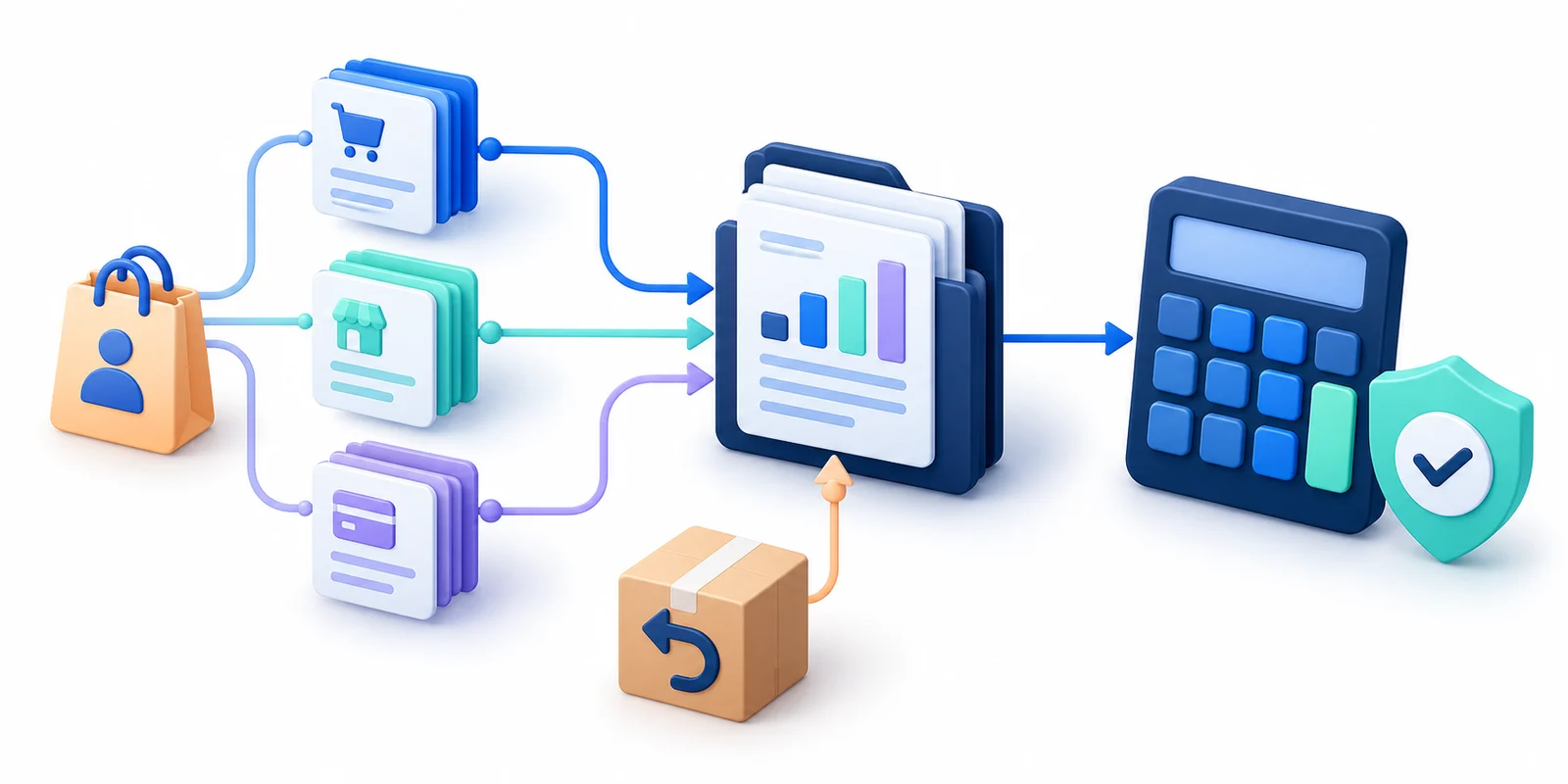
Connected APIs do not automatically create correct reports. Data arrives at different times and can include duplicates and corrections.
Separate provisional data from final documents. A failed update must not appear as zero sales.
Five layers of a management model
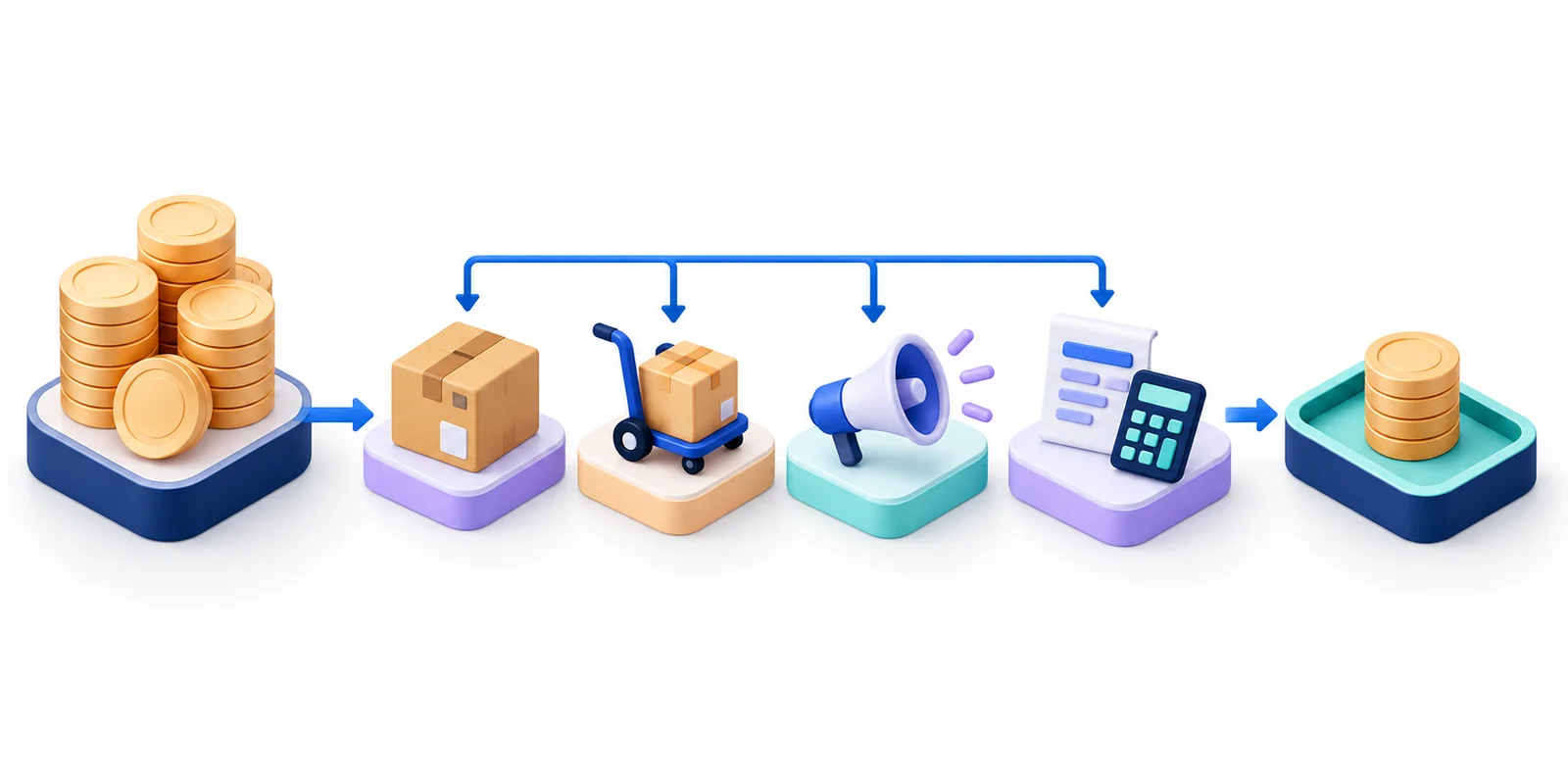
- Orders, completed sales and returns: demand and realized sales.
- Financial operations: fees, services, compensation and settlements.
- Stock and supplies: availability and replenishment.
- Advertising: costs, periods and attribution.
- Product costs and external expenses: full business economics.
Show update times and period status because these layers become final at different times.
Same headers, different operations: the original Ozon Excel
In Ozon «Отчет о реализации», «Выплаты по механикам лояльности партнёров, руб.» occurs in two groups. Under «Реализовано» it represents sale-related payments; under «Возвращено клиентом» it represents their returns. Mapping the lower label alone loses this distinction: retain both field name and group.
| Model field | Original | Treatment |
|---|---|---|
| Partner payment on sale | «Выплаты по механикам лояльности партнёров, руб.» within «Реализовано» | Add the income amount |
| Partner-payment return | «Выплаты по механикам лояльности партнёров, руб.» within «Возвращено клиентом» | Subtract the positive return amount in the inspected form |
| Own product code | «Артикул» | Preserve as text and map to the directory |
| Marketplace SKU | «SKU» | Do not confuse with own product code |
partner payments on sales − partner-payment returns reconciles to «Всего выплат от партнёров (руб.):»; realization − realization returns to «Итого реализовано (за вычетом возвратов) (руб.):». Both identities were checked against original product rows. Exclude footer totals from sums. Ozon’s guide describes the groups; field names come from the source export.
Relationships matter more than export volume
Product mapping and transaction uniqueness are separate problems. Market «Отчёт о платежах» has «ID транзакции» and «Ваш SKU». Populated transaction IDs were unique in the inspected file. One SKU can still have many payments, services and returns; deduplicating by SKU deletes valid operations.
- Include marketplace, source, merchant account and operation ID in a financial-operation key. Keep private IDs out of externally shared reports.
- Reimporting an identical file must not change operation counts or amounts. Updated versions of known operations need correction history.
- Define a source-specific rule where no stable ID exists. Row position alone does not establish identity in the next export.
- Keep order, delivery, accrual, refund and bank-transfer dates separate; do not compare different date bases as one period.
Ozon monthly realization aggregates products rather than assigning an ID to every individual sale. Use it as a total control, not a transaction ledger. Map bundles and variants explicitly.
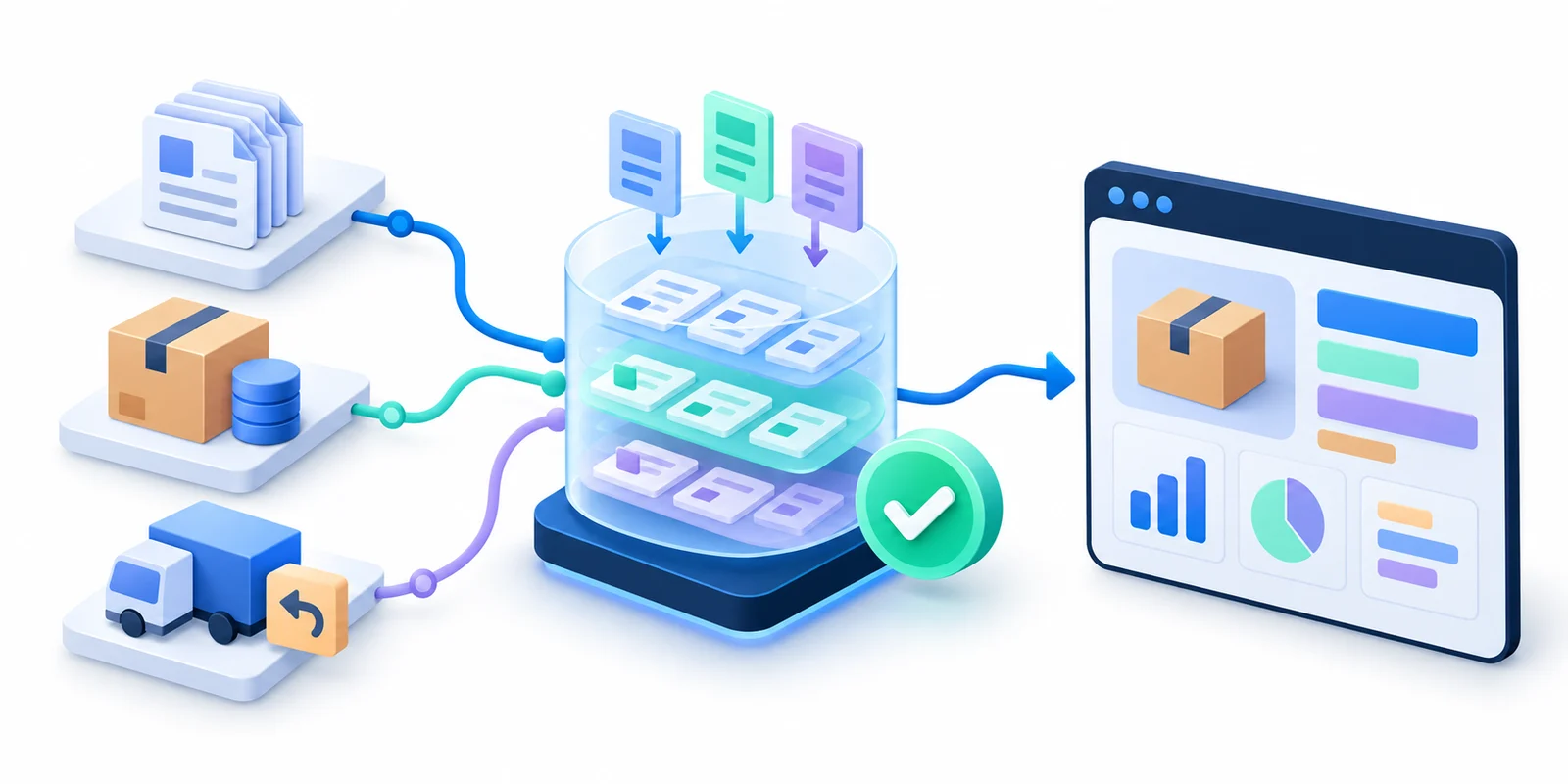
Five checks before showing a report
- Completeness: all pages and dates are loaded.
- Uniqueness: repeated requests do not duplicate operations.
- Reconciliation: comparable totals agree with the source.
- Explainability: differences can be traced to operations.
- Freshness: show the last successful update.
An empty response may indicate a temporary issue. Preserve verified data until a replacement is proven complete.
Use the layers together in UniTab
Show each metric’s definition, period and loading status. For example, Market key-metrics revenue does not deduct refunds, so comparing it with payments net of refunds can produce an expected difference rather than an importer error.
For Market payment controls retain «Дата транзакции», «Сумма транзакции, ₽», «Тип транзакции» and «Источник транзакции». Filters determine included operations. Services, points and buyer money need classification before aggregation.
In UniTab distinguish the operational overview from closed P&L. Incomplete loads should expose the last successful update and missing period. Your team must establish purchase costs and external expenses; marketplace APIs do not know your purchase price.
Frequently asked questions
Can orders alone establish profit?
No. Orders may be cancelled or returned. Profit also requires actual sales, expenses and cost of goods.
Why do API and closing reports differ?
Dates, provisional values, corrections or metric definitions may differ. Align the period and meaning first.
How should a charge without a product be handled?
Keep it as a shared operation and document any management allocation separately.
Should history be deleted after a failed update?
No. Preserve verified history and show the update failure. Replace data only after completeness checks.
Check your product economics
Start with price, cost of goods and marketplace expenses. Compare scenarios before buying stock, then check the forecast against actual results.
Open the free calculator