Implement digitization in two stages: data, roles and acceptance
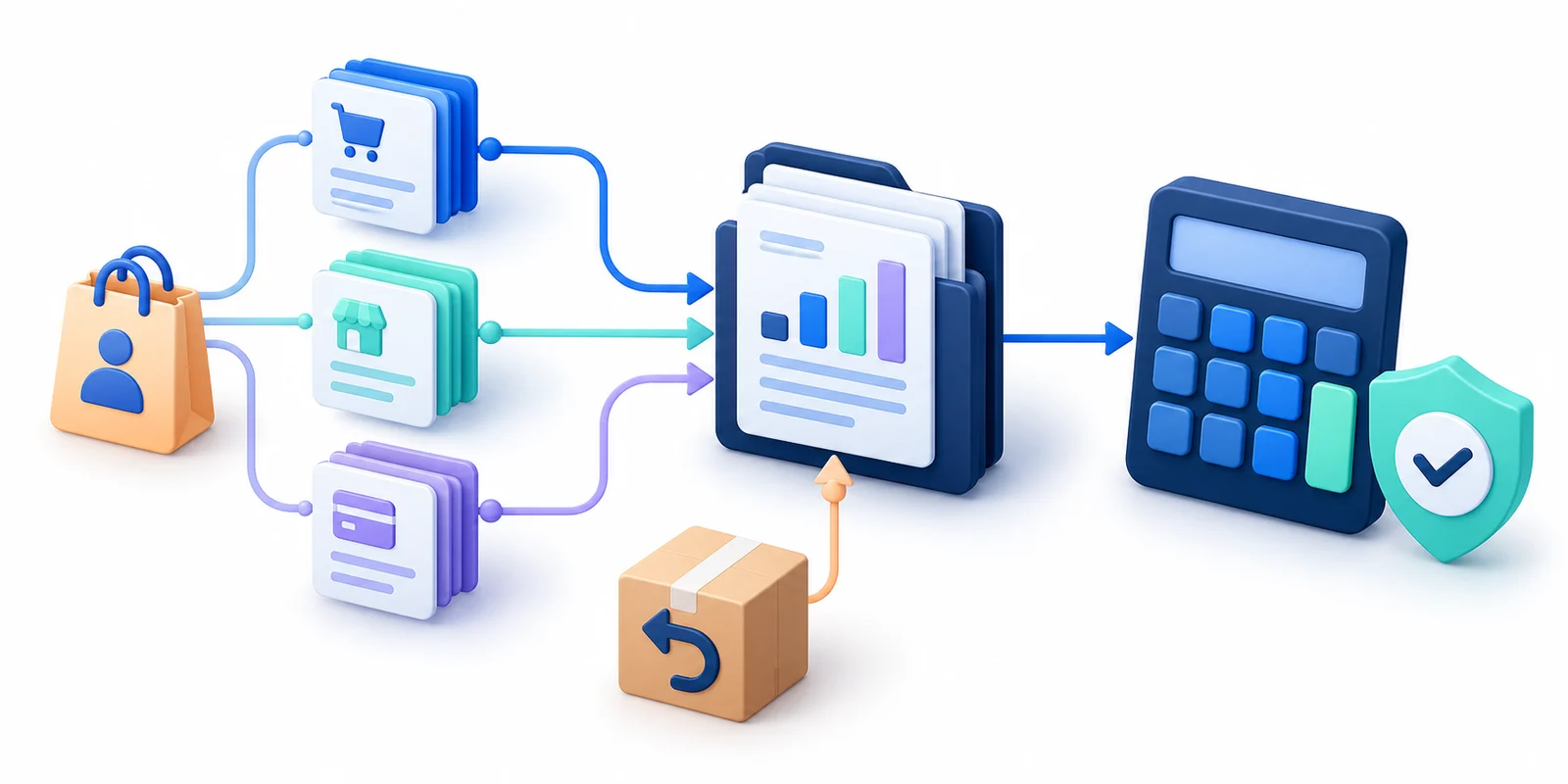
Connecting a marketplace does not establish profit. Reconcile sales, returns and services to source documents first, then add purchase costs, external expenses and team rules. Each step below has an observable acceptance result.
Assign data owners, choose a closed control period and agree on acceptance criteria before expanding.
Set the scope first
Choose the initial assortment or marketplace and assign owners for cost of goods, external expenses and final P&L. Agree on revenue, sale and return dates, costing and advertising definitions. Clear ownership prevents conflicting reports.
Stage 1. Reconcile sources and product mappings
| Step | Work | Acceptance evidence |
|---|---|---|
| Sources | Download one closed period and retain originals | Register of marketplace, form, period, worksheet and retrieval date |
| Products | Map own codes to marketplace SKUs and bundles | Unmatched sales are visible rather than silently lost |
| Sales and returns | Reconcile product rows, footers and signs | Independent totals and explained discrepancies |
| Services | Separate accrual types, ads and settlements | Every amount has a source and is counted once |
Ozon monthly realization and weekly accruals can cover different dates. Market delivery and payment transactions also have different dates. Agree each control’s basis before comparing totals.
The report and tax guide lists download paths and actual fields. When a form changes, remap fields by name, worksheet and group.
Stage 2. Add costs and accept working reports
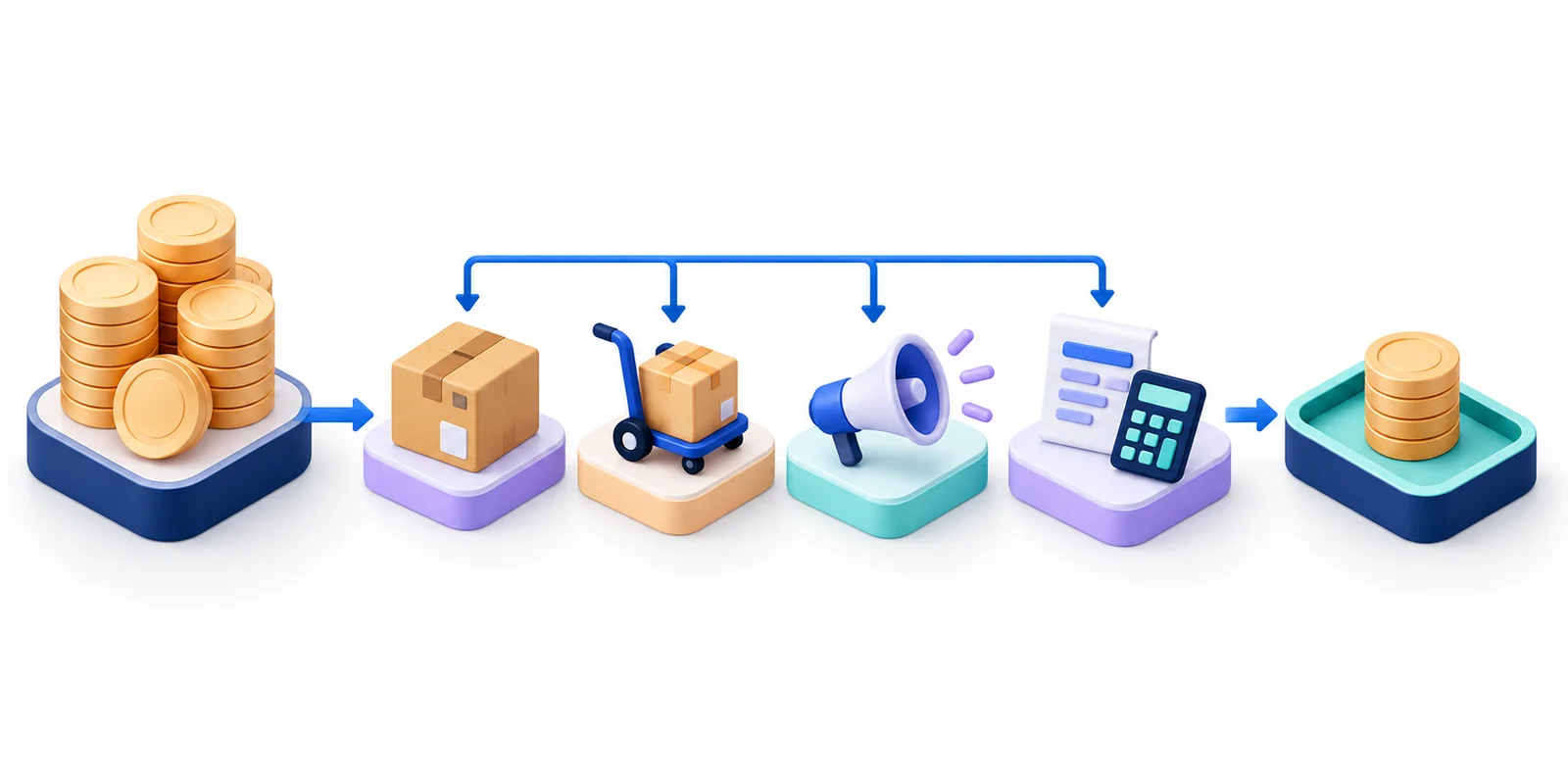
Add documented purchase costs, packaging, external freight, off-platform ads and overhead. Each cost needs a supporting record, period and allocation rule. Missing inputs keep the report provisional; zero in place of unknown cost makes profit unreliable.
- Business owner: approves profit definitions and decision criteria.
- Purchasing owner: confirms batch costs, bundle contents and preparation costs.
- Finance owner: checks external expenses, taxes, bank and settlements.
- Data owner: checks completeness, mappings and corrections.
After reconciliation, establish a routine: monitor data freshness and commitments, check contribution and stock before purchasing, and close P&L after final documents arrive. Timing depends on source completeness and accounting complexity. Measure time saved before and after on the same task rather than promising a figure.
Acceptance using actual Ozon and Market forms
Use actual report forms as the acceptance set. These are checks to perform, not an invented profit case.
| Check | Source | Acceptance condition |
|---|---|---|
| Ozon realization net of returns | «Отчет о реализации», «Реализовано на сумму, руб.» and «Возвращено на сумму, руб.» | realization − realization returns matches «Итого реализовано (за вычетом возвратов) (руб.):» |
| Ozon partner payments | «Выплаты по механикам лояльности партнёров, руб.» within «Реализовано» and «Возвращено клиентом» | partner payments on sales − partner-payment returns matches «Всего выплат от партнёров (руб.):» |
| Market delivered value | «Доставленные товары»: «Доставлено, шт.», «Цена с НДС с учётом всех скидок за шт., ₽», «Стоимость всех доставленных штук с НДС с учётом всех скидок, ₽» | Delivered value = quantity × unit price; do not sum unit prices instead of value |
| Market buyer refund | «Отчёт о платежах»: «Источник транзакции» and «Сумма транзакции, ₽» | Do not subtract the already negative refund twice |
| Reimport | Market «ID транзакции» and source context | Identical files do not duplicate operations; changes are explainable |
| Profit completeness | Purchase and external-expense records | Flag missing costs and withhold final profit until complete |
The first two identities and delivered-value identity were checked against original exports. Reimport is a separate system acceptance test to execute and document. Merchant amounts and private IDs are not published. See Market’s official help for available financial forms.
Criteria for expanding the scope
- Every sale has a product mapping; unknown purchase costs and unmatched rows are visible.
- Sales, returns and services are reconciled independently for the agreed period.
- Footer totals are not counted twice; refund and correction signs are preserved.
- Ads and external expenses are counted once with explicit overhead allocations.
- Tax has its own documented base; payouts reconcile to bank and settlements.
- Reimport does not duplicate operations; source changes explain result changes.
- The team knows data owners and can reconstruct each metric from records.
Add further marketplaces after accepting the first scope. Keep shared definitions but recheck each form’s fields, dates, discounts and settlements.
Frequently asked questions
What determines implementation time?
Purchase and external-document completeness, product mappings, marketplace count and return-accounting rules determine the work. Verify one closed period and resolve gaps first. Elapsed days alone do not establish reporting readiness.
Who owns the numbers?
Assign an owner for every source and a business owner for the reporting methodology.
What if the reports disagree?
Align dates and definitions, then trace differences to operations. Do not overwrite totals without a documented cause.
When should other marketplaces be added?
After the initial scope passes closed-period checks and the team adopts the operating rules.
Check your product economics
Start with price, cost of goods and marketplace expenses. Compare scenarios before buying stock, then check the forecast against actual results.
Open the free calculator