Product unit economics: price, advertising and break-even
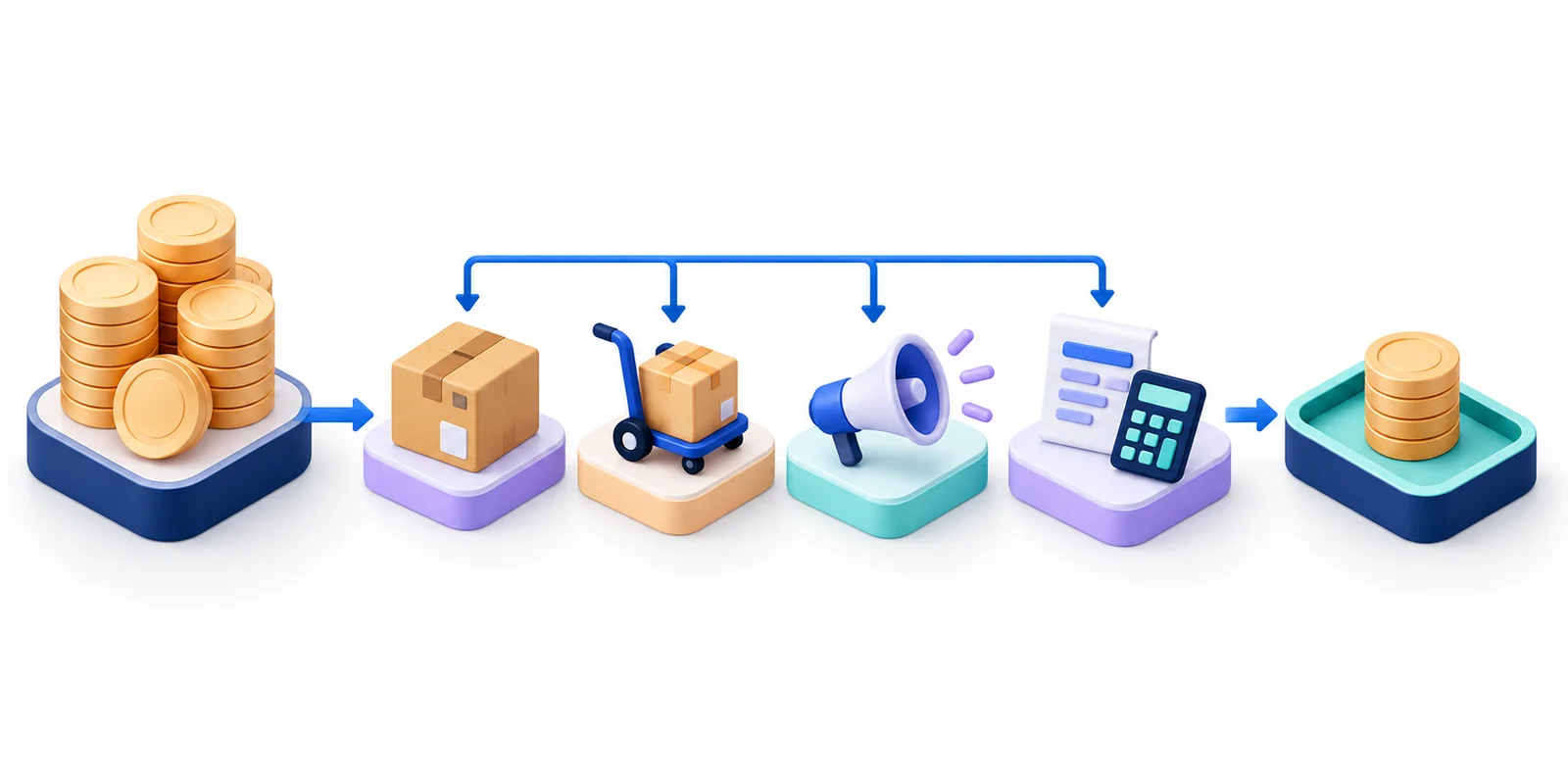
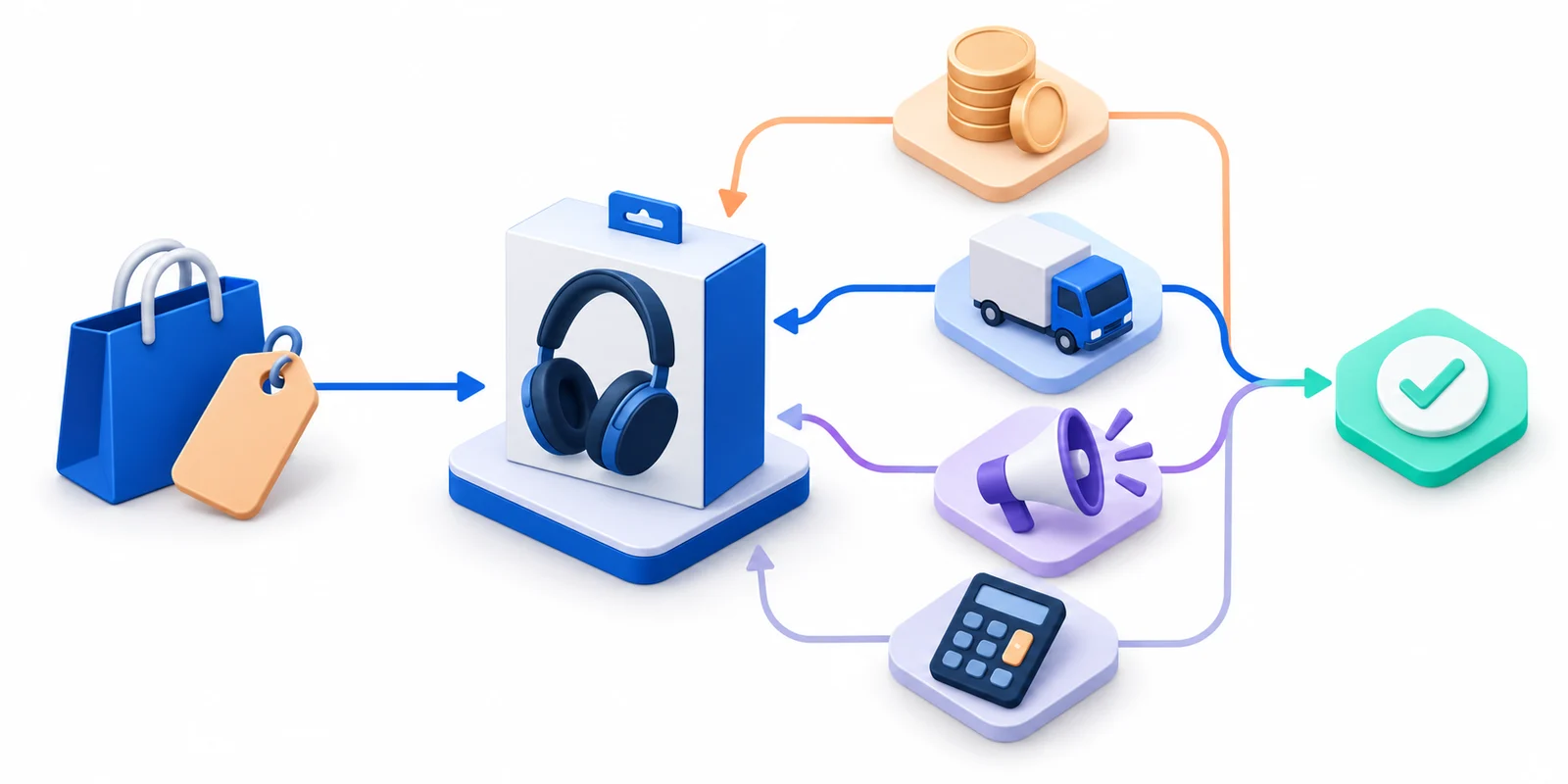
Store-level profit can hide loss-making products. Unit economics checks the contribution of each sale before fixed business costs.
Establish selling income and costs from documents first, then test advertising allowance and overhead coverage. Unknown purchase cost is not zero.
What belongs in one sale
Separate seller price and buyer price. Seller-funded and marketplace-funded discounts are different inputs. A known percentage discount allows a price calculation; actual results should use realization data instead of an assumed platform-discount rate.
Price after a percentage discount = price before it × (1 − discount / 100)
Sale contribution = attributable income − purchase cost − variable expenses − attributable taxes
The free UniTab calculator shows seller and buyer prices separately; buyer price is calculated after the specified discounts. Seller price forms the commission and acquiring bases; the selected platform-discount mechanism affects final service cost. Tax uses the income base and selected VAT/tax settings. This is a scenario calculation: reconcile inputs with actual results instead of treating them as report-derived tariffs.
For income-only USN without VAT, do not replace buyer realization with pre-platform-discount turnover or net payout. The tax base can also include monetary partner payments, premiums, compensation and return adjustments. See the tax article for rules and actual columns.
Where actual Excel files show buyer price, quantity and value
Open Ozon «Отчет о реализации». Locate the table’s fields by name within «Реализовано», then check return amounts, quantities and prices separately within «Возвращено клиентом». Column and header positions can differ between forms.
| Sale input | Ozon field | Purpose |
|---|---|---|
| Own product | «Артикул», «SKU» | Connect realization, accruals and purchase costs |
| Buyer unit price | «Цена реализации, руб.» within «Реализовано» | Use actual realization price, not «Цена продавца» from a different report |
| Sold units | «Кол-во» within «Реализовано» | Distinguish one-unit price from total value |
| Realized value | «Реализовано на сумму, руб.» within «Реализовано» | Control the product row’s realization amount |
| Partner payment | «Выплаты по механикам лояльности партнёров, руб.» within «Реализовано» | Check a separate income component |
| Returns | Within «Возвращено клиентом»: «Возвращено на сумму, руб.», «Выплаты по механикам лояльности партнёров, руб.», «Кол-во», «Цена реализации, руб.» | Account for returns separately from sales |
Costs come from another file: «Начисления», «Артикул», «SKU», «Группа услуг», «Тип начисления», «Сумма итого, руб.». SKU mapping helps identify direct costs; retain unattributed overhead separately. Add purchase costs from your own documents.
Download realization under Finance → Documents → Sales reports → Closing. For accruals use Finance → Store economics → Download report → Accruals, select the period and download. This path is confirmed in Ozon’s official accrual-report instructions. Ozon’s help describes the sales/returns structure. Match monthly costs to the same closed month; a weekly filename alone is insufficient for monthly allocation.
Check price and the advertising limit
Calculate the advertising allowance after other variable costs. Deduct purchase cost, services, packaging, logistics, other direct expenses and estimated tax from selling income to obtain pre-ad contribution. Reserve enough for overhead and the target result.
Ad allowance per unit = pre-ad contribution − required post-ad contribution
Break-even units = round up (fixed costs / positive unit contribution)
The volume formula assumes stable positive contribution and a defined set of fixed costs. Multiple products require a sales mix; one average can conceal negative-contribution SKUs. Zero or negative contribution cannot be fixed by volume within this model.
Test minimum prices through calculator scenarios, changing seller price, seller discount, platform discount and ads separately. Fixed logistics, service minimums and stepped tariffs do not fit one universal percentage. Reconcile actual realization and accruals after a price change.
Original-file check: unit price is not row revenue
On Market download Finance → Financial reports → Realization. Sheet «Доставленные товары» contains these fields:
| Exact label | Check |
|---|---|
| Доставлено, шт. | Delivered units |
| Цена с НДС с учётом всех скидок за шт., ₽ | Discounted unit price |
| Стоимость всех доставленных штук с НДС с учётом всех скидок, ₽ | Total row value |
| Ваш SKU | Link to your product |
Inspected delivered-row control: Delivered goods value = delivered units × buyer unit price
This identity reconciled across product rows in the original file. It explains why summing unit prices instead of total delivered value loses the effect of multi-unit rows. It establishes delivered goods value in realization, not tax timing or net profit.
Returns are on «Возвращенные товары», where the field is «Стоимость всех возвращённых штук с НДС с учётом всех скидок, ₽». The inspected file has no returned-product rows, so it cannot supply a real return amount. For monetary reconciliation use the separate payment report and its original signs. See Market’s guide for the forms.
Turn the calculation into an action
- Purchase cost unknown. Fill it from purchase records; a missing value must not become zero profit cost.
- Contribution negative. Inspect actual price, direct costs, returns and ad charges before scaling the same economics.
- Contribution positive but overhead uncovered. Check volume and product mix, then calculate required volume under explicit assumptions.
- Contribution sufficient. Check available stock and replenishment funding before increasing ads.
Define the denominator for contribution percentages. Buyer-revenue margin and pre-platform-discount turnover margin differ even with the same contribution amount. Label the basis.
Frequently asked questions
Is contribution net profit?
No. It covers fixed costs; net management profit is calculated after all relevant business costs.
Why do discounts hurt profit disproportionately?
A seller discount reduces selling income while fixed monetary costs remain. Platform discounts separately affect buyer price and settlements through their own mechanism. Change inputs separately in the calculator and check realization and accruals; tax also depends on the regime and other income.
How should returns be included?
Track reversed revenue, restored cost of goods and remaining return-related charges. Compare forecast reserves with actual costs.
Can every product use identical expense rates?
Only as an initial approximation. Category, dimensions, selling model and promotion can differ substantially.
Check your product economics
Start with price, cost of goods and marketplace expenses. Compare scenarios before buying stock, then check the forecast against actual results.
Open the free calculator